Breaking down my profitable trades on Google for you

In this article I’m going to be breaking down my profitable trades on Google for you. These are in line with my MACD trading strategy which is a multi-timeframe analysis strategy, the details of which can be found linked on this blog and on my Patreon page and You Tube account. I will breakdown my entry and exists and the reasons behind these decisions. I hope you find the article useful.

What strategy to use for making profitable trades on Google?

I recently shared a strategy on my You Tube channel which outlines a flexible, profitable way of placing trades repeatedly on a market. The strategy is especially suited to trading the NASDAQ but I have been applying it to other markets with success. It can be applied to Google to make profitable trades on Google too. You can find the strategy below:

The strategy is based on my original MACD strategy which you can find on my Patreon account, linked below. However, it is now tailored to deal with the Trump tweets and trade wars as well as the other turbulence on the markets. I used to use a stop loss but I no longer control my risk in this way. You can find a video on what I changed to make my trading style more adaptable to the turbulence in the stock markets, here:

So now that I’ve explained which strategy I’m using currently, I’m going to be breaking down my profitable trades on Google for you.

Trades on Google – explained

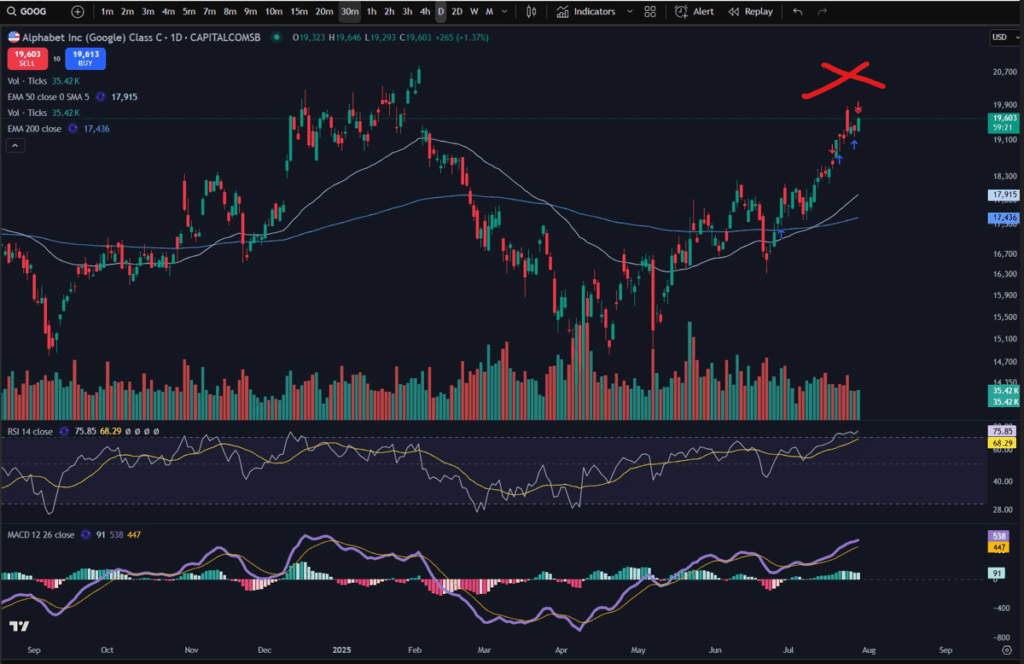
So as you will know from reviewing my strategy above, the first thing I look for is a market which is ‘uptrending’ on the daily timeframe. I make sure that there is plenty of headroom before it reaches the previous high. Let’s take a look at Google Class C’s daily timeframe chart per Trading View to analyse the profitable trades on google I placed. (To get a discount on Trading View, please see the link below):

Google Class C – Daily Time Frame:
profitable trades on Google

You can see that the previous highs reached in around February 2025 are some way off from the recent prices where I have marked the chart with a red cross. Since there is plenty of scope for the price to come up to previous levels, and the price has been in a nice uptrend since around April – May 2025, I began to look for opportunities on a smaller time frame. It is worth noting that another key item I focus on, on the daily timeframe is the position of the MACD indicator. The MACD indicator was ‘on its way up’ after the MACD and signal lines had crossed over, and the histogram bars were still green. I also look at the RSI indicator. This one was showing that the market was in fact a little overbought when I entered. However, knowing that the market had plenty of scope to come up and given my more flexible trading style outlined in the video above in terms of adapting to turbulent market conditions, I knew I had a good chance of making profit on the stock from this position. I waited for a pull back on the smaller timeframe (30 minute timeframe) – examined below.

Google Class C – 30 Minute Time Frame:
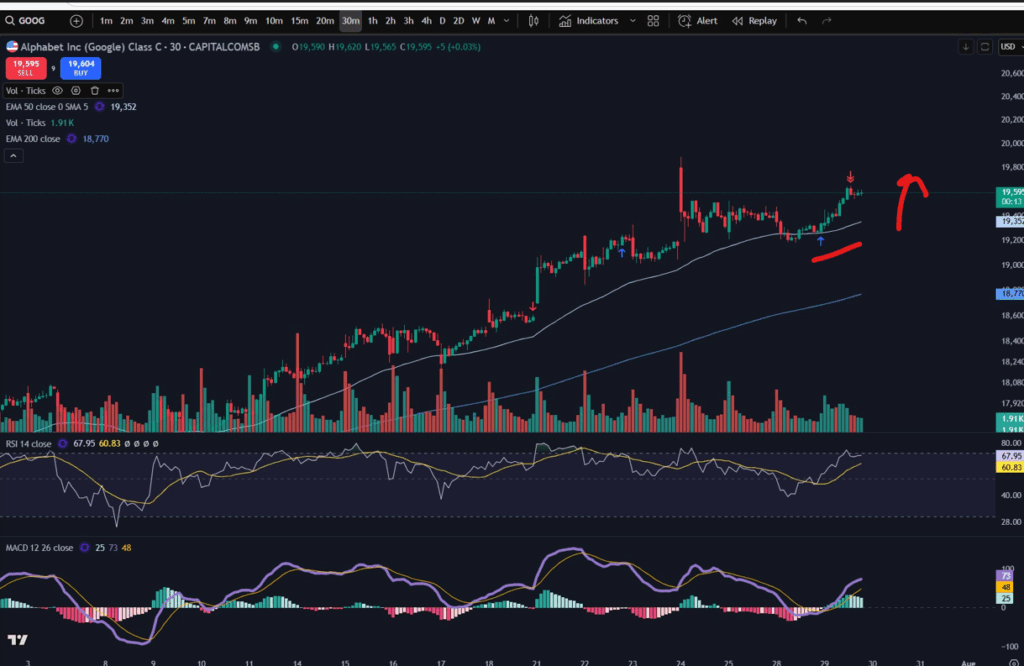
As you can see in the above chart screen shot, I entered the market where the blue arrow is – a perfect entry according to my MACD strategy. The price did indeed go on towards previous highs and this is where I exited. (I actually had two positions on this market when I exited. You can see the preceding blue arrow where I entered for the first time. Unfortunately I missed my exit with that first one and got out of both trades at the red arrow. As per my video shared above, I no longer set profit targets or stop losses habitually. I do set a stop in certain conditions only – when the market has gone into profit and I want to ride a trend.

You can see on the 30 minute timeframe that the RSI was low at the point of entry, the MACD and Signal lines had just made a cross over and I knew from analysis on the daily timeframe that the market had a good chance of coming up further. The market was also making higher highs and higher lows on this 30 minute timeframe which is a crucial check I carry out before entering on the smaller timeframe.

The trade was profitable. I am finding this method of trading with a more flexible approach to risk management, much more beneficial (and less stressful).

I hope you enjoyed this article. I encourage you to carry out your own due diligence before placing any trades but I hope this analysis was of some assistance to you in terms of you understanding some possible approaches to trading.

If you appreciate these free articles it would really help me to finance them and produce more of them, if you are able to make a purchase on my Patreon page by subscribing as a member or purchasing a video – linked below.

Useful links for you:

Understand my strategy in full: https://www.patreon.com/Traderpro8320

For more great tips on trading the financial markets, please visit my blog:

https://sophiatrades.co.uk

Discount on Trading View:

https://www.tradingview.com/?aff_id=117138

My performance in the live markets:

https://sophiatrades.co.uk/category/my-performance-statistics

Finally, thank you to my existing members on Patreon, and for your likes, comments and subscribes. Happy trading!

Please note any subscriptions taken via my affiliate link with Trading View may result in me earning a small commission.
NASDAQ trading strategy that will make you thousands! ££££££

NASDAQ trading strategy that will make you thousands! ££££££

In this article i’m going to talk about a NASDAQ trading strategy which can literally make you thousands!! I’ve been using this strategy on the NASDAQ for the last few months and it has proved to be very successful. I’ve also linked below a video showing you some of my entry and exit points on Trading View. The video explains the strategy but I have outlined it below, too. This strategy builds on my MACD strategy which regular visitors to this site will know me well for. However, I made a few tweaks to take account of the unique personality of the NASDAQ index, and I also made some allowances for Trump’s tweets which have been sending the markets loopy lately! I hope you enjoy this article.

NASDAQ trading strategy – how it works

The NASDAQ trading strategy applies my usual MACD strategy as follows:

  • * Identify a nice uptrend on the daily time frame;
  • * Make sure the price is above the 200 period EMA;
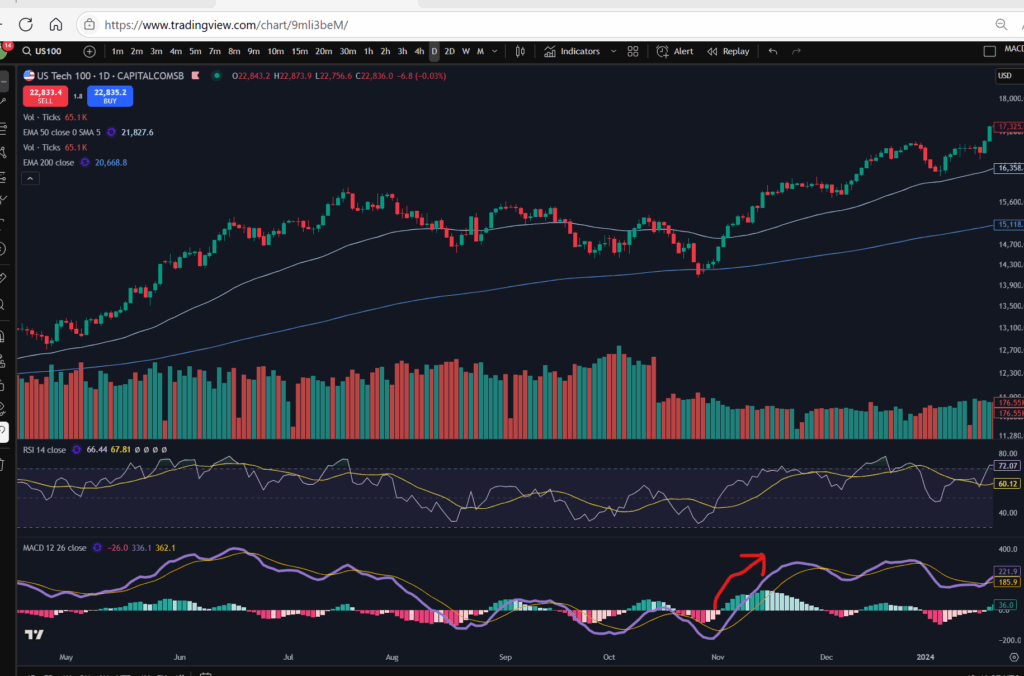
  • * You want to get in per this NASDAQ trading strategy when the market is pushing up per the daily timeframe. To identify this, get in after the MACD and signal lines have made a cross over, ideally from a point below the zero level of the histogram. Ideally the RSI will be low at this point or at least not at a very high/overbought level:
NASDAQ trading strategy
  • *Once the MACD and signal lines have crossed over or are about to cross and go up again on the daily timeframe, you can visit a quicker/lower timeframe to find your entry and exit points, like the 30 minute timeframe.
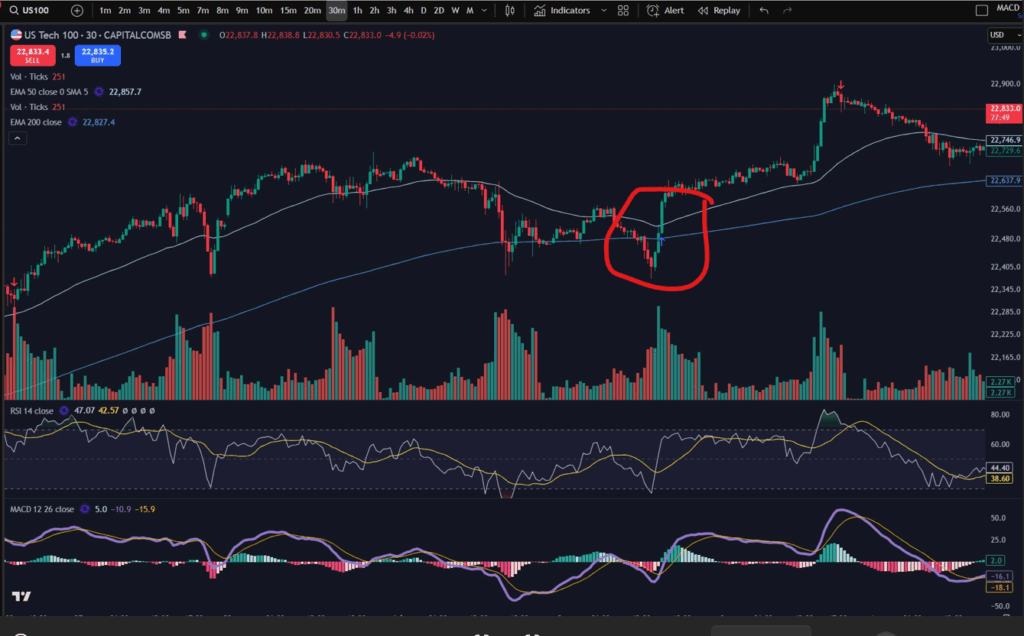
  • *On the 30 minute timeframe, wait for the price to pop up over the 50 period EMA on the quicker timeframe as in the picture below:
NASDAQ trading strategy
  • *Once the price has popped up over the 50 period EMA, this would be a good place to enter the trade, based on your 30m timeframe and daily timeframe analysis.
  • *You can trail a stop below the latest low of the 30 minute timeframe trend, to scoop as much profit as possible from the move, before the trend reverses.

NASDAQ trading strategy – my recent entries and exits:

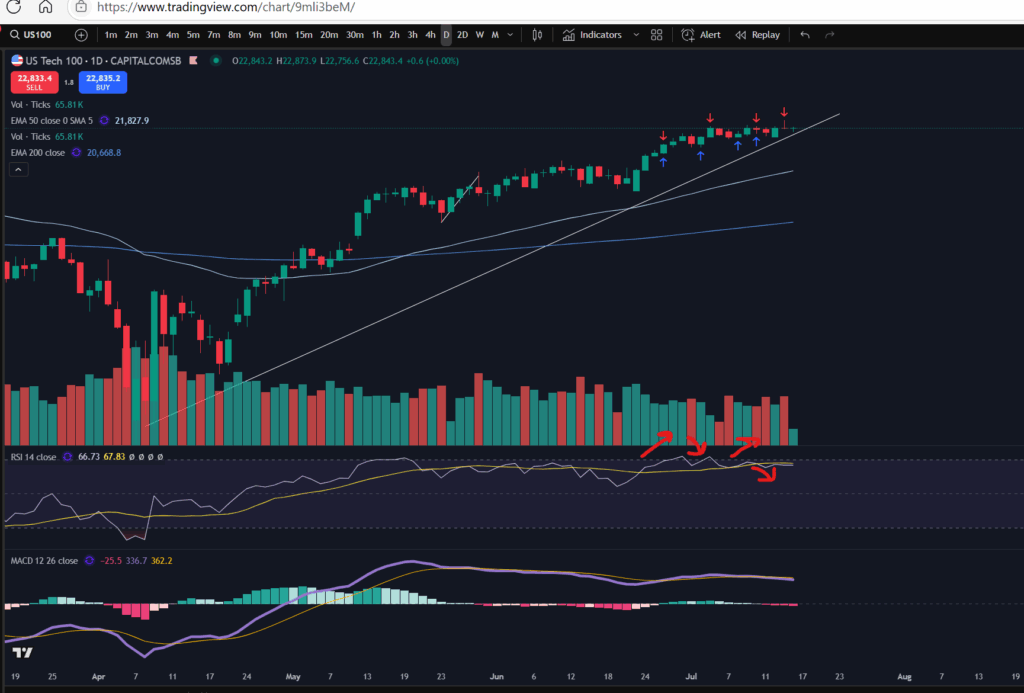
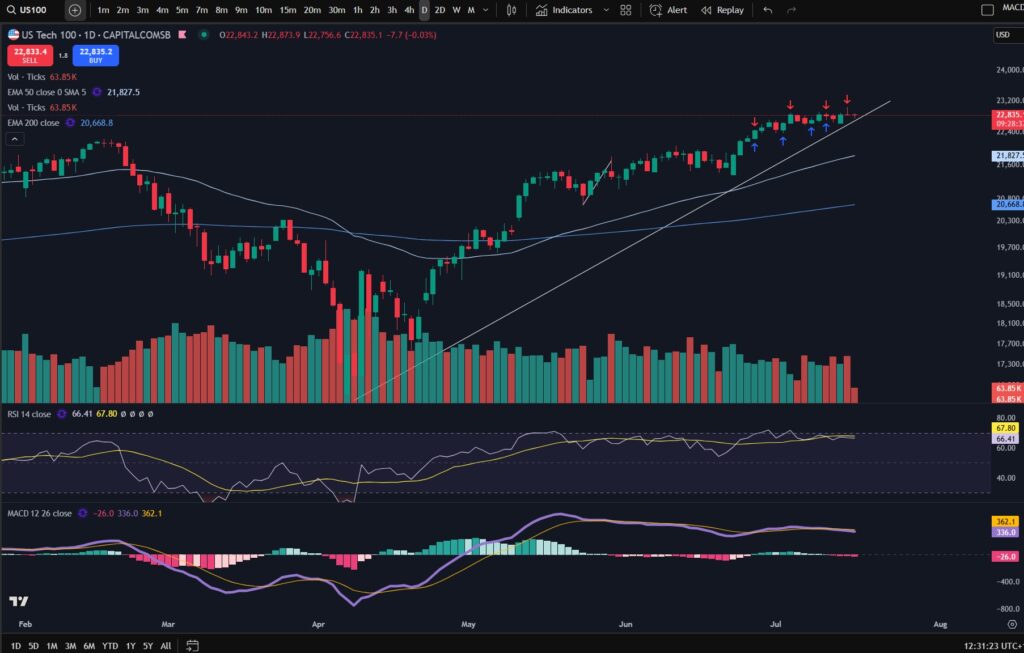
I’ve shared below the view from the daily timeframe of my own recent entries and exists using the NASDAQ trading strategy:

NASDAQ trading strategy

You can see i’ve been entering and exiting the market over and over and i’ve made a nice profit in the last few months in this way, not just on the NASDAQ but on other markets too!

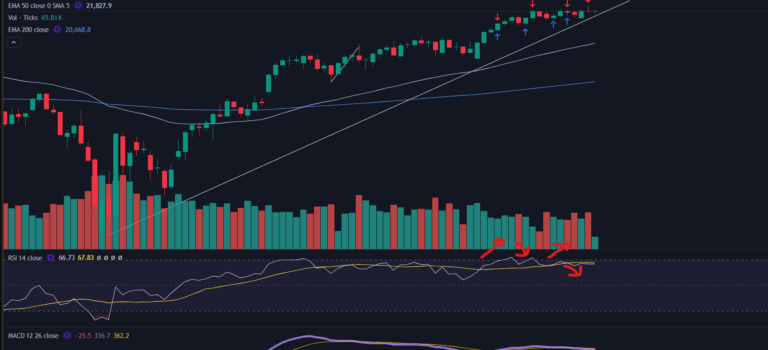
In terms of the view from the daily timeframe, some things to watch for include the ‘personality’ of the RSI indicator. I suggest you have this on your chart and watch for the subtle ebs and flows of this indicator up and down to check when the market has likely reached another little peak/trough:

NASDAQ trading strategy

Its’ a bit difficult to show clearly here but you can see the little red arrows I have marked on the direction of the RSI indicator. I got in, each time the RSI had pulled back to a tiny dip position, and got out again when it extended to the top of the RSI channel. You can use the RSI indicator to help you identify the peaks and troughs in this way and to get in and out of the market several times over. Compare the blue and red arrows on the candlesticks above which show my entries and exits, to the flows of the RSI indicator below.

Now let’s look at the entries and exits on the 30 minute timeframe:

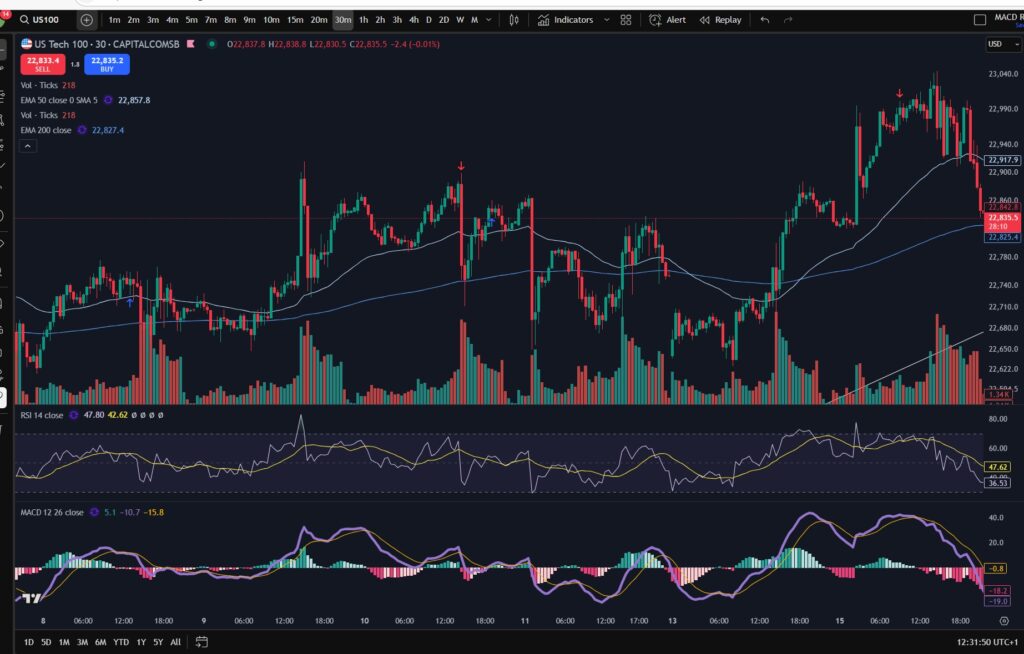
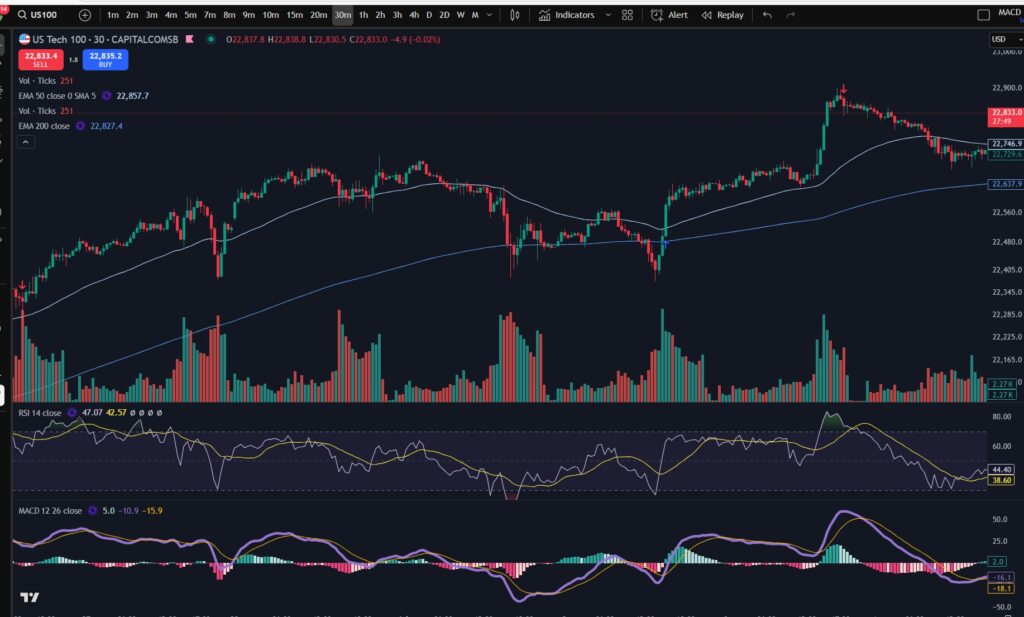
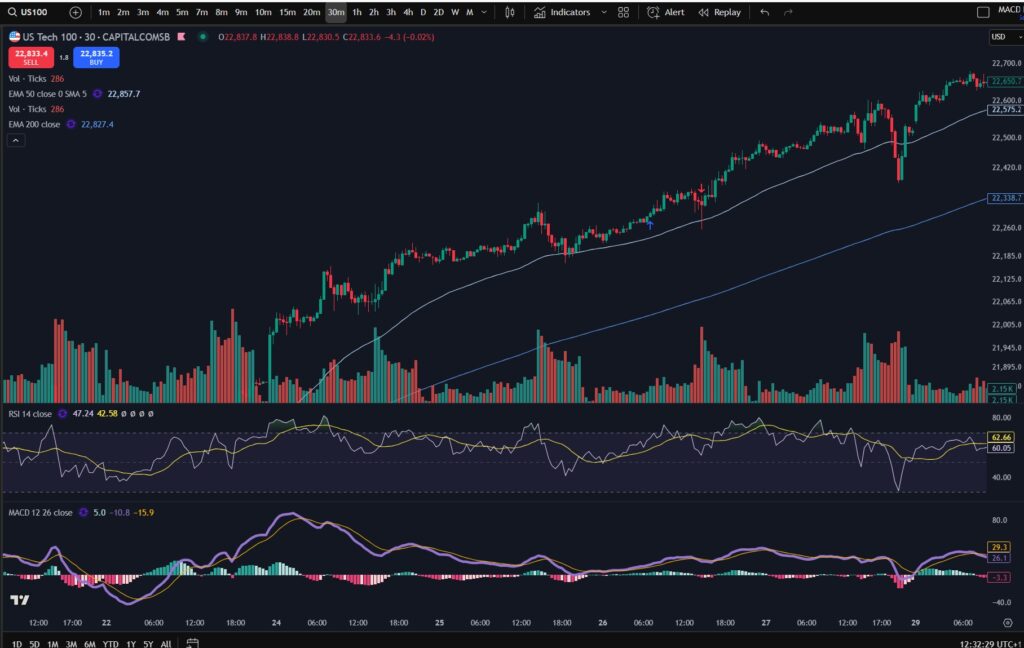
Here are some screen shots of the recent entries I made per the 30 minute timeframe view:

NASDAQ trading strategy

Some notes for you on the 30 minute timeframe view to bear in mind while you are applying this NASDAQ trading strategy – my entries and exits were not always perfect! There was one or two occasions where the market pulled back a bit further, after I entered. I prepared another recent article about how Trump’s tweets are affecting the stock market and I talked in that article about how to deal with the turbulent fallout. Here is a link to that video:

Here is the blog article I wrote about adapting my trading style to deal with President Trump’s tweets:

How President Trump is affecting the stock market – Trader Pro

As a result of my adaption to dealing with the markets in this new ‘Trump’ era, I learnt to ‘loosen’ my trading style. The key points I made were that I control my position size and I no longer use a stop loss. (I actually started out not using a stop and then started applying one some time into my trading journey, but now I have reverted back to not using one). This can only work if you control your position size and you are unlikely to get a margin call when the market goes slightly against you! It is not a recommendation to get into huge position sizes and not apply a stop loss.

The NASDAQ can be good for someone learning this NASDAQ trading strategy because it’s an average of some of the top stocks in America. Therefore, they are highly likely to push up overall and the ‘bad news’ of one of the companies on the index, is unlikely to pull the whole index down indefinitely. So… if the market dips a little and I entered at the wrong place/it was not a perfect entry, it’s ok. I wait – confident that I checked the daily timeframe and I was satisfied it is indeed near a low point overall. I wait for it to recover, and then take my profit again.

If the market did not recover for some time after my entry, I am still confident I will not be given a margin call – you can see other blog articles on my website which explain what a margin call actually is, and how to avoid it. If the markets have dipped down so much that they don’t recover for a while, it’s also a good time to stay out of the markets so I will be waiting in any event, and there is no loss for me except the little bit of profit on the portion of my account size which has been trapped/locked into my trade further up on the chart. In this scenario my plan would be to wait for the market to bottom out, and then get back in with another portion of my account, once i’m confident it’s recovering, and make profit all the way back up in the way I have illustrated above. I hope this makes sense to beginners but if you want to reach out and ask for further explanation I would be happy to help!

How do you know that the market had bottomed out after such a large pull back? You wait to see that it’s started making higher highs and higher lows, on the daily timeframe again. Here is a link to an article, showing you how to identify highs and lows properly:

Amazing secrets to help you make more money trading – spot a downtrend early! – Trader Pro

A video which will help you understand the strategy…

I’m sharing a video of the strategy being explained on You Tube which I hope you will find helpful:

I hope you found this NASDAQ trading strategy article helpful!

Understand my strategy in full: https://www.patreon.com/Traderpro8320

For more great tips on trading the financial markets, please visit my blog:

https://sophiatrades.co.uk

Discount on Trading View:

https://www.tradingview.com/?aff_id=117138

My performance in the live markets:

https://sophiatrades.co.uk/category/my-performance-statistics

Finally, thank you to my existing members on Patreon, and for your likes, comments and subscribes. Happy trading!

Please note any subscriptions taken via my affiliate link with Trading View may result in me earning a small commission.
How to use technical indicators in Trading View

In this article i’m going to talk about how to use technical indicators. I will share how you can tailor some of the key indicators in Trading View. Trading View is a trading platform which is fully customisable. The paramaters and settings for the technical indicators you are likely to be using, are fully adjustable. I use Trading View for my own trading, and I feel strongly that it’s an asset to my trading and success in the financial markets. I hope you find this article helpful.

How to use technical indicators – Changing the technical settings

Let’s just jump right into how to use technical indicators in Trading View. With almost all technical indicators in Trading View, we can change the technical settings. Let’s consider the MACD (Moving Average Convergence Divergence) indicator, first.

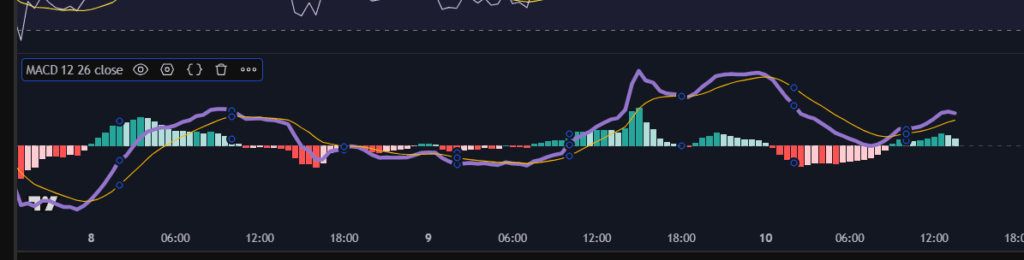
I selected the MACD line by left clicking until I could see the little circles (in blue below). This meant I had selected the indicator.

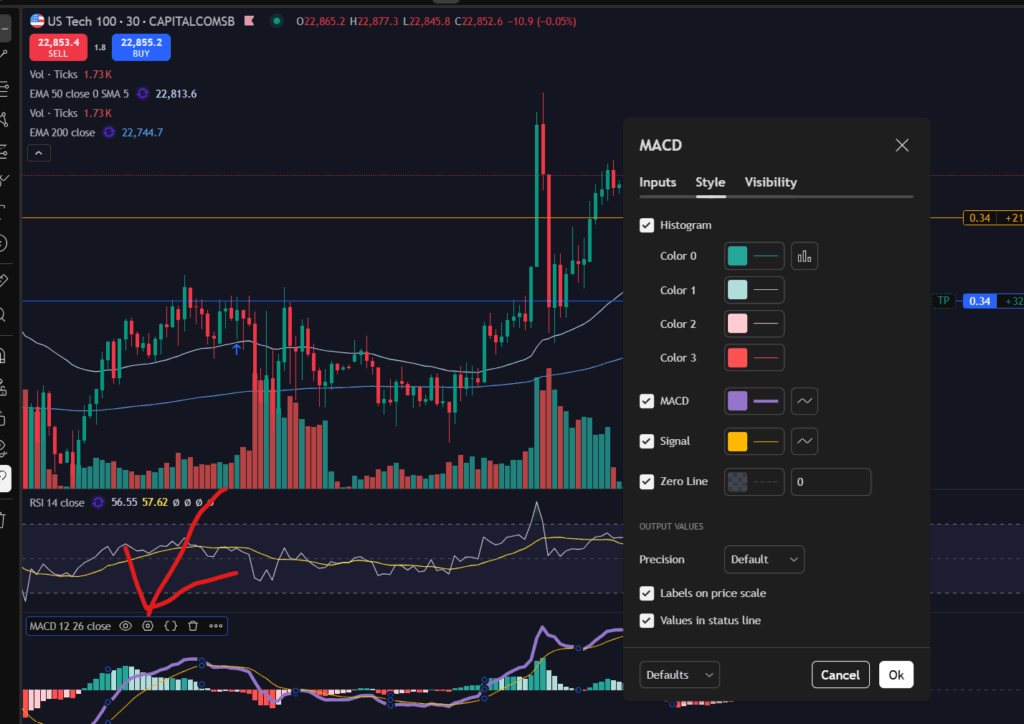
Next, click on the little hexagon shape with the circle in the middle, shown here with a red arrow:

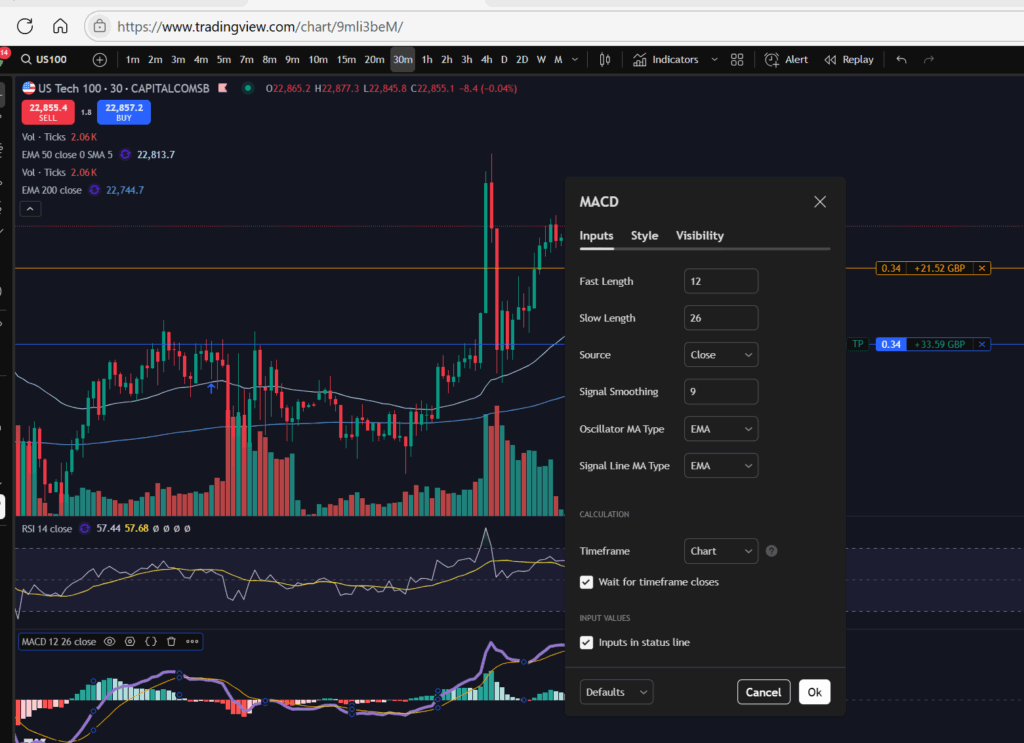
Once you click on this, the options menu for the MACD indicator will appear as shown above. You can change the ‘technical settings’ of this indicator by clicking on the ‘Inputs’ tab of this pop up menu:

The settings are set to the ‘defaults’ as shown above, but you can change the length of the periods which control the MACD and signal lines using the input boxes above.

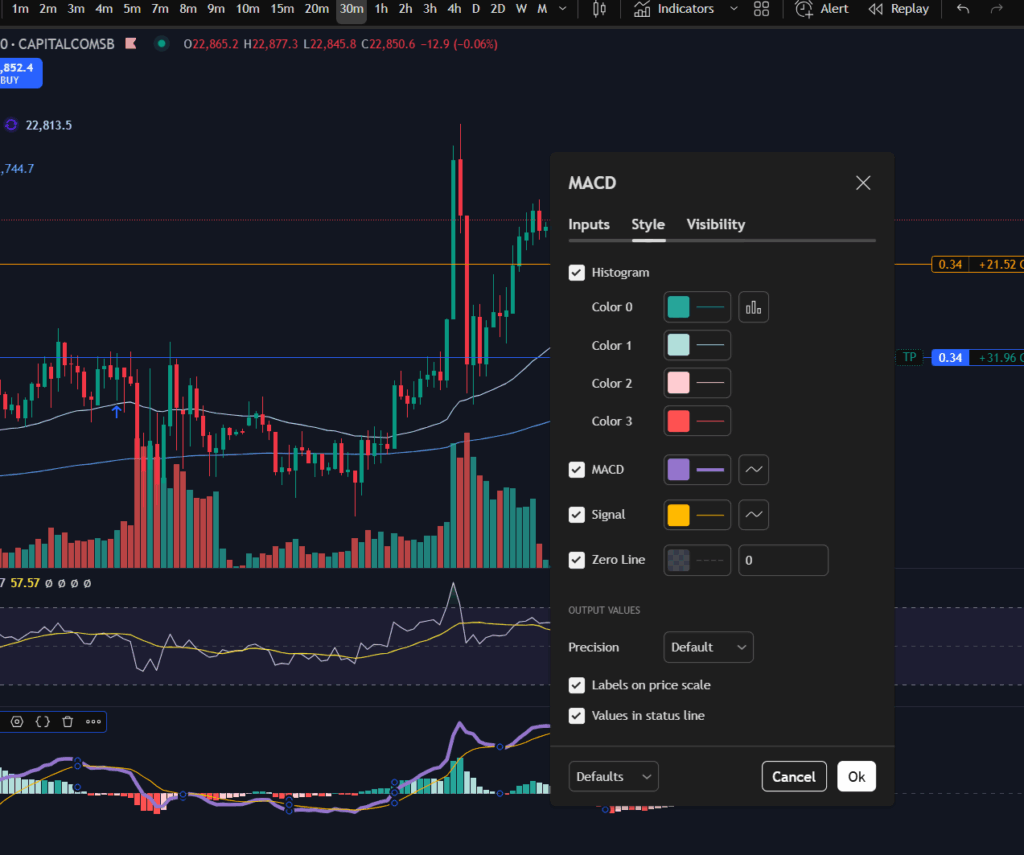
As you probably noticed from the earlier screen shot, you can also change the colours of the MCAD indicator. I like to use Dark Mode on Trading View, so I find it helpful to have a thick mauve line for the MACD indicator as I can see this more easily when using dark mode, especially as it crosses the histogram. If left to the default settings, it can be difficult to see the lines against a light histogram bar background. By the way, the histogram colours can also be changed by changing the drop downs boxes on the ‘Style’ tab of this pop up menu, too:

Once you are happy with your changes, press ‘OK’ on the menu, and the changes will be applied to your chart.

EMA lines

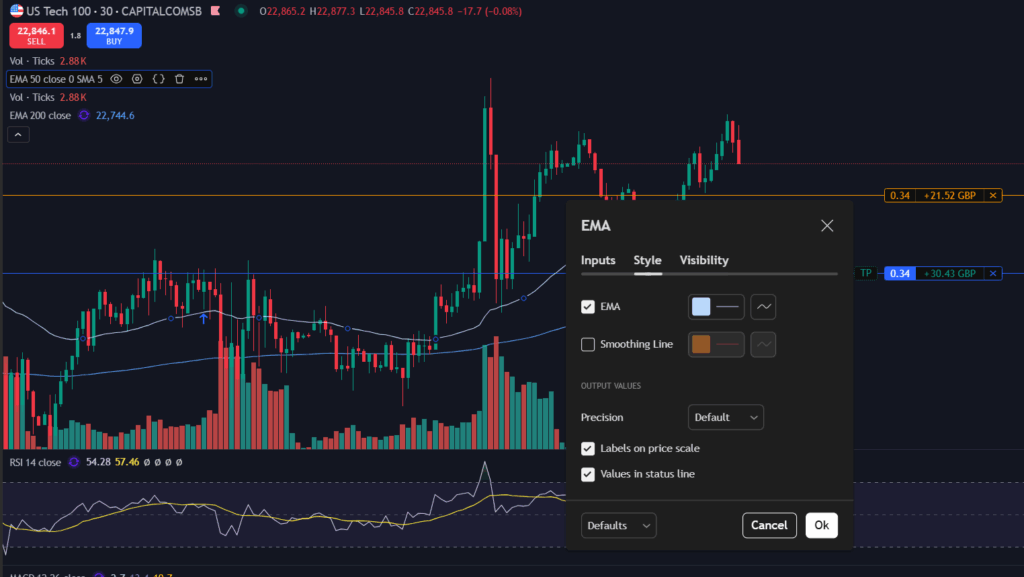
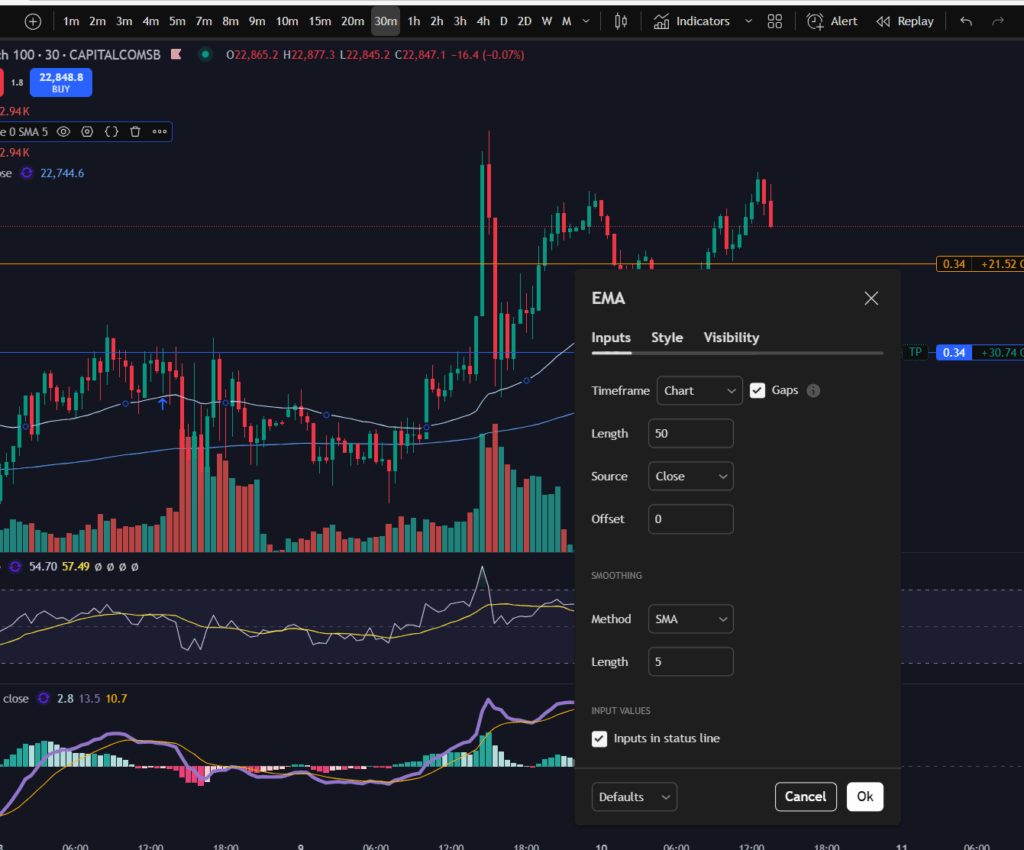
Let’s just look briefly at the EMA lines too. The period over which the average calculation is calculated can be changed in the same way as I described with the MACD indicator – click on the indicator once, to select it. Once you see the blue circles appear, click on the settings again:

How to use technical indicators

Once again, the technical inputs are on the ‘Inputs’ tab of the pop up menu:

How to use technical indicators

You can also change the colour and thickness of the EMA lines.

I hope you found this article helpful. If you would like to see the corresponding video on YouTube, please click on the link below:

For more great tips and advice on trading the stock market, please visit:

https://sophiatrades.co.uk

To watch me trade live please visit my patreon page here:

https://www.patreon.com/Traderpro8320

Finally, if you would like to receive a discount on the Trading View charting software I use, please click on the relevant link here:

https://www.tradingview.com/?aff_id=117138

Please note any subscriptions taken via my affiliate link with Trading View may result in me earning a small commission.  However, I provide complete transparency on me using Trading View personally – I publish my success on the financial markets via my broker reports and any profits earned were done so by using my own Trading View subscription,  so I genuinely do recommend them and have been using the Trading View charts for many years.
How to sort your watchlists in Trading View

How to sort your watchlists in Trading View

In this article I’m going to talk about how to sort your watchlists in Trading View. The platform is highly intuitive and I find it an invaluable resource when filtering markets and finding stocks and commodities to trade. Please read on if you would like to know more and receive a discount on the Trading View platform!

How to sort your watchlists in Trading View

Let’s jump right into how to sort your watchlists in Trading View. I’ve been using the platform Trading View for a number of years. The platform is highly intuitive – you can right click for most things and find the option you want! Let’s take a closer look at how to sort your watchlists in Trading View!

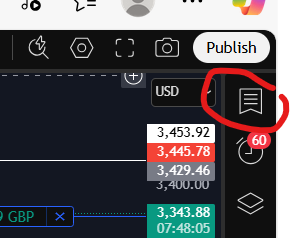
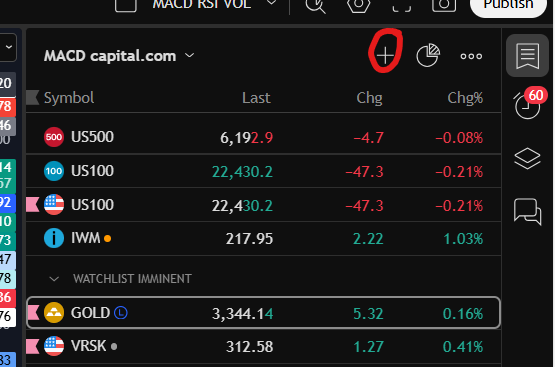
Firstly, where is the watchlist? There is a little icon which looks like a bookmark at the top right hand corner of the screen, here:

How to sort your watchlists

Once you click on this, it will give you your watchlist. If there are no items on your list, you can start adding them by clicking on the ‘+’ icon here:

How to sort your watchlists

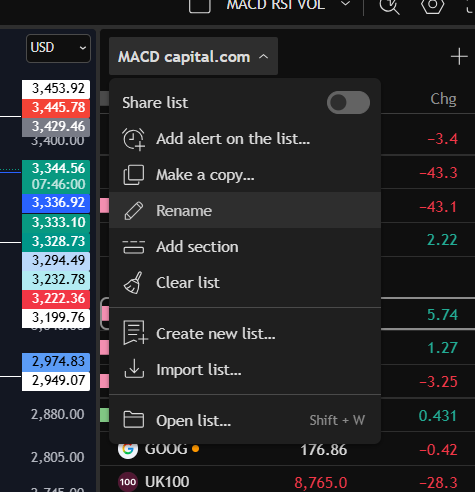
You can see, I have renamed my watchlist above as ‘MACD Capital.com’. In order to rename your watchlist, simply click on the drop down list next to the list and it will give you a number of options, including ‘rename’:

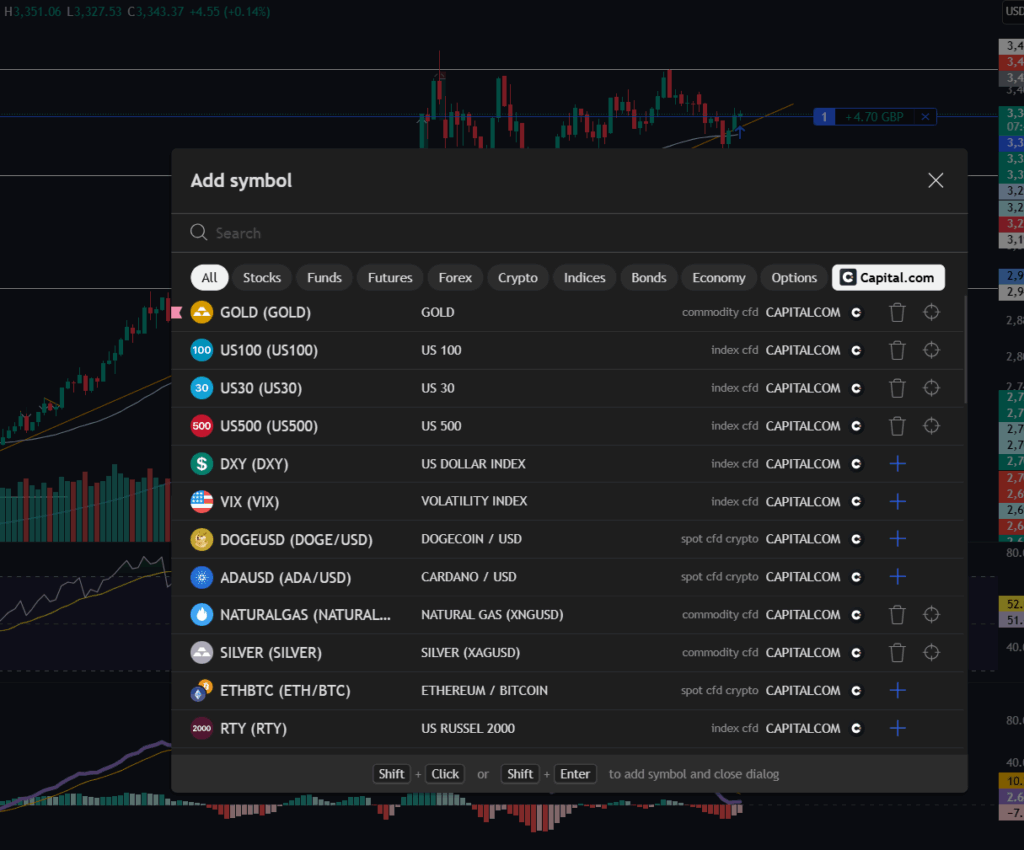
When you go to add markets to your watchlist with the ‘+’ icon, you will see the following screen:

The platform defaults to applying a filter for markets listed on Trading View with your own broker (the broker you have logged into the platform with). You can see above, that for me, it has automatically filtered the markets by the ones I can trade through Capital.com. You can remove this filter to see all markets, however.

You can search for markets in the search box and the search is highly intuitive. Searching for ‘Gold’ will give you all markets with ‘Gold’ in the name description. This may sound obvious but I have experienced frustration with other broker accounts (for example, Pepperstone) where you search for a market using ‘Gold’ and nothing comes up! YOu need to know the specific symbol (XAUUSD I believe but don’t quote me on that!).

To add a market to your own watchlist, click the ‘+’ next to the listed item and it will be added to the bottom of your watchlist.

Sorting items in your watchlist in Trading View

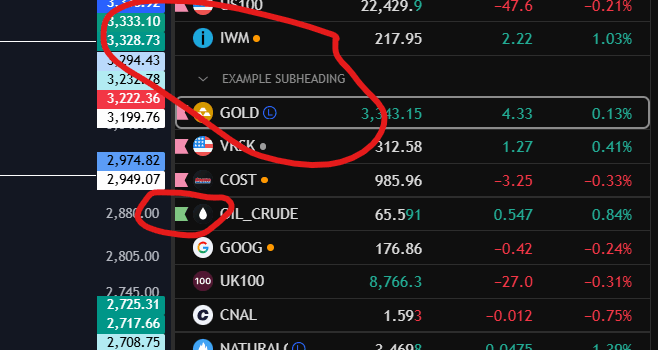
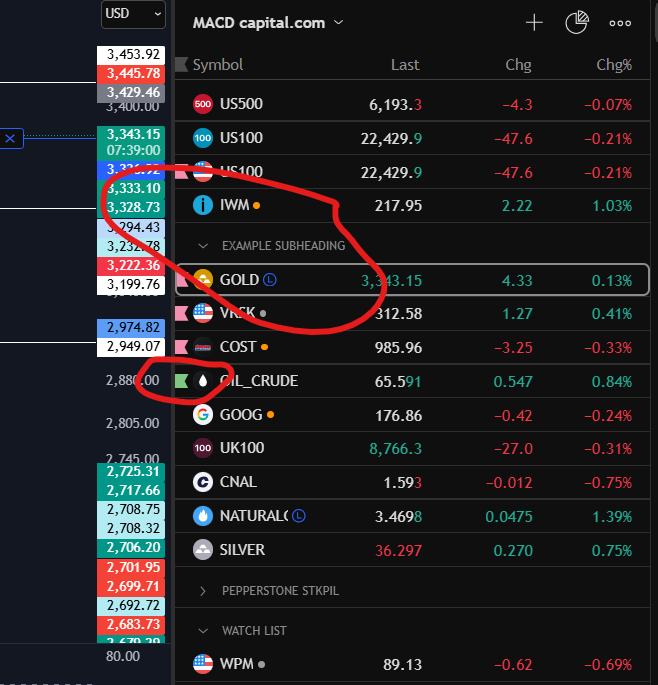
There are some really nice features you can use to sort and organise your own watchlists in trading view (and you can have multiple ones). For example, you can drag the markets into the right position using your mouse. You can right click and add subheadings which can then be collapsed or expanded. You can also add coloured flags to particular markets. Please see below screen shot for examples:

To create more than one watchlist in Trading View

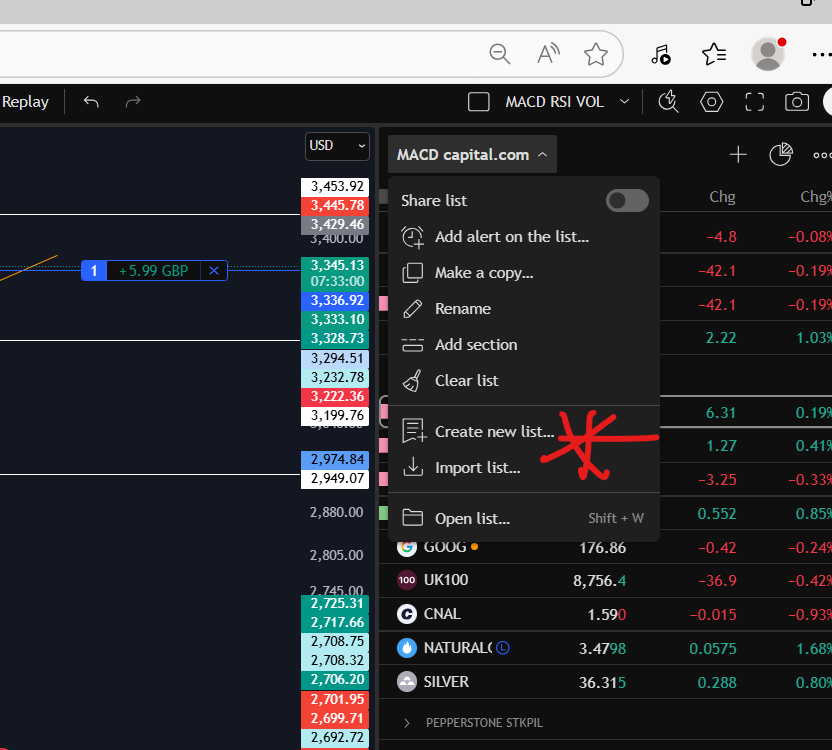
You can create multiple watchlists in Trading View and rename them as you wish. Just go to the drop down menu next to your currently viewed list and you will see a ‘create new list’ option there.

Please also see the video tour on our You Tube channel here which you may also find helpful:

How to sort your watchlists in Trading View

I hope you found this article helpful.

For more great tips and advice on trading the stock market, please visit:

https://sophiatrades.co.uk

To watch me trade live please visit my patreon page here:

https://www.patreon.com/Traderpro8320

Finally, if you would like to receive a discount on the Trading View charting software I use, please click on the relevant link here:

https://www.tradingview.com/?aff_id=117138

Please note any subscriptions taken via my affiliate link with Trading View may result in me earning a small commission.  However, I provide complete transparency on me using Trading View personally – I publish my success on the financial markets via my broker reports and any profits earned were done so by using my own Trading View subscription,  so I genuinely do recommend them and have been using the Trading View charts for many years.